How Integrated Engineering Solutions Improve Safety, Efficiency & Long-Term Performance
How Integrated Engineering Solutions Improve Safety, Efficiency & Long-Term Performance
Modern buildings and facilities depend on many technical systems working together. Electricity, fire protection, security, climate control, backup power, and energy systems all play an important role in daily operations. When these systems are planned separately without proper coordination, businesses may face higher costs, installation conflicts, maintenance problems, and unnecessary downtime.
An integrated engineering approach helps solve this problem by considering different systems as part of one complete infrastructure. Yousol Technologies (Pvt.) Ltd. provides solutions across electrical engineering, fire safety, security and automation, HVAC and ventilation, and solar energy. By coordinating these services properly, residential, commercial, and industrial clients can improve safety, efficiency, and reliability while making future upgrades easier.
Why Integrated Engineering Matters
Every technical system inside a building depends on another system in some way. HVAC equipment requires a stable electrical supply. Fire alarm panels depend on reliable backup power. CCTV cameras and access control devices require structured electrical and communication connections. Solar systems must connect safely with the building’s electrical infrastructure.
When these systems are designed and installed without considering each other, problems can appear later. Electrical loads may be underestimated, access routes may become blocked, equipment rooms may become overcrowded, or maintenance access may be difficult.
Integrated engineering helps reduce these issues by considering the complete project from the beginning. It allows electrical, mechanical, safety, and security requirements to be coordinated before installation starts.
Strong Electrical Infrastructure Is the Foundation
Electrical systems are one of the most important parts of any building. They provide power to lighting, HVAC, security equipment, fire systems, office equipment, industrial machinery, and other essential systems.
A well-designed electrical system begins with proper load planning and distribution. LT panels and distribution panels help organize power across different areas of a building. They also provide protection against faults and make it easier to isolate circuits during maintenance.
Earthing and grounding systems are equally important. They help reduce the risk of electric shock and protect equipment from electrical faults. Proper grounding also supports the safe performance of sensitive electrical and electronic equipment.
Lightning protection systems can provide additional protection for buildings that are exposed to lightning-related risks. When properly designed, these systems help direct electrical energy safely toward the ground.
UPS and backup power systems are also valuable for buildings where interruptions can affect important operations. Offices, data systems, security equipment, fire alarms, medical facilities, and industrial controls may require continuous power even during outages.
Fire Safety Protects People and Property
Fire protection systems are essential for reducing risk in commercial, residential, and industrial environments. A complete fire safety solution usually includes detection, alarm, suppression, and maintenance.
Fire alarm systems help detect smoke, heat, or other signs of fire and provide early warning to occupants. Early detection can make a major difference during an emergency by giving people more time to evacuate and allowing emergency procedures to begin sooner.
Fire sprinkler systems help control or suppress a fire automatically. These systems are especially important in offices, warehouses, shopping centers, factories, and other large facilities.
Fire hydrant systems provide access to water for firefighting operations, while fire extinguishers offer immediate protection for small incidents when used correctly.
Special fire suppression systems may also be required for areas containing sensitive equipment or higher fire risks.
Regular inspection and maintenance are just as important as installation. Fire protection equipment must remain operational and ready for use at all times. Preventive maintenance and annual maintenance contracts can help identify issues before they affect system performance.
Security and Automation Improve Control
Modern security systems are becoming more advanced and connected. CCTV cameras, access control, gate automation, and electric fencing can work together to provide stronger protection and better control.
CCTV surveillance allows property owners and facility managers to monitor important areas. Cameras can be installed around entrances, parking areas, production spaces, warehouses, offices, and property boundaries.
Access control systems help organizations manage who can enter specific areas. Instead of relying only on traditional keys, access can be controlled through cards, biometric devices, or other electronic systems.
Gate automation provides convenient and controlled entry for vehicles. Automatic gates and barriers are commonly used in offices, industrial facilities, residential communities, warehouses, and commercial properties.
Electric fencing can add another layer of perimeter security for sites that require stronger boundary protection.
When these systems are properly integrated, facility managers gain better visibility and control while reducing dependence on manual security processes.
HVAC and Ventilation Support Comfort and Productivity
Indoor comfort has a direct impact on how people experience a building. Temperature, airflow, and air quality all contribute to a comfortable environment.
HVAC systems help regulate temperature and provide cooling or heating depending on the building requirements. Commercial buildings, offices, factories, and residential properties all have different climate control needs.
Ventilation systems help move fresh air through a building while removing heat, moisture, odors, or airborne contaminants. This is particularly important in industrial facilities, workshops, warehouses, kitchens, and production areas.
Exhaust systems can remove unwanted air from specific areas, while industrial and commercial fans can improve airflow in large spaces.
A properly designed HVAC system should balance comfort with energy efficiency. Oversized or poorly maintained equipment can increase energy consumption and operating costs.
Regular servicing helps HVAC systems perform efficiently and reduces the risk of breakdowns. Preventive maintenance may include cleaning filters, inspecting components, checking airflow, and evaluating equipment condition.
Solar Energy Supports Long-Term Efficiency
Solar energy has become an important part of modern infrastructure. It allows homes and businesses to generate electricity from sunlight and reduce dependence on conventional energy sources.
On-grid solar systems are commonly used where a reliable utility connection is available. These systems allow electricity generated by solar panels to support daytime energy requirements.
Hybrid solar systems combine solar generation with battery storage. This allows energy to be stored and used later when needed.
Lithium battery systems can improve energy flexibility and provide backup support for selected loads. They can also be integrated with solar systems to improve overall energy management.
Commercial and industrial solar installations can be especially valuable for businesses with high daytime electricity consumption. By generating part of their energy on-site, companies may reduce operational costs and improve energy efficiency.
EV charging systems are another important part of future-ready infrastructure. As electric vehicles become more common, businesses and residential developments can prepare by installing suitable charging facilities.
Why Proper Coordination Saves Time and Cost
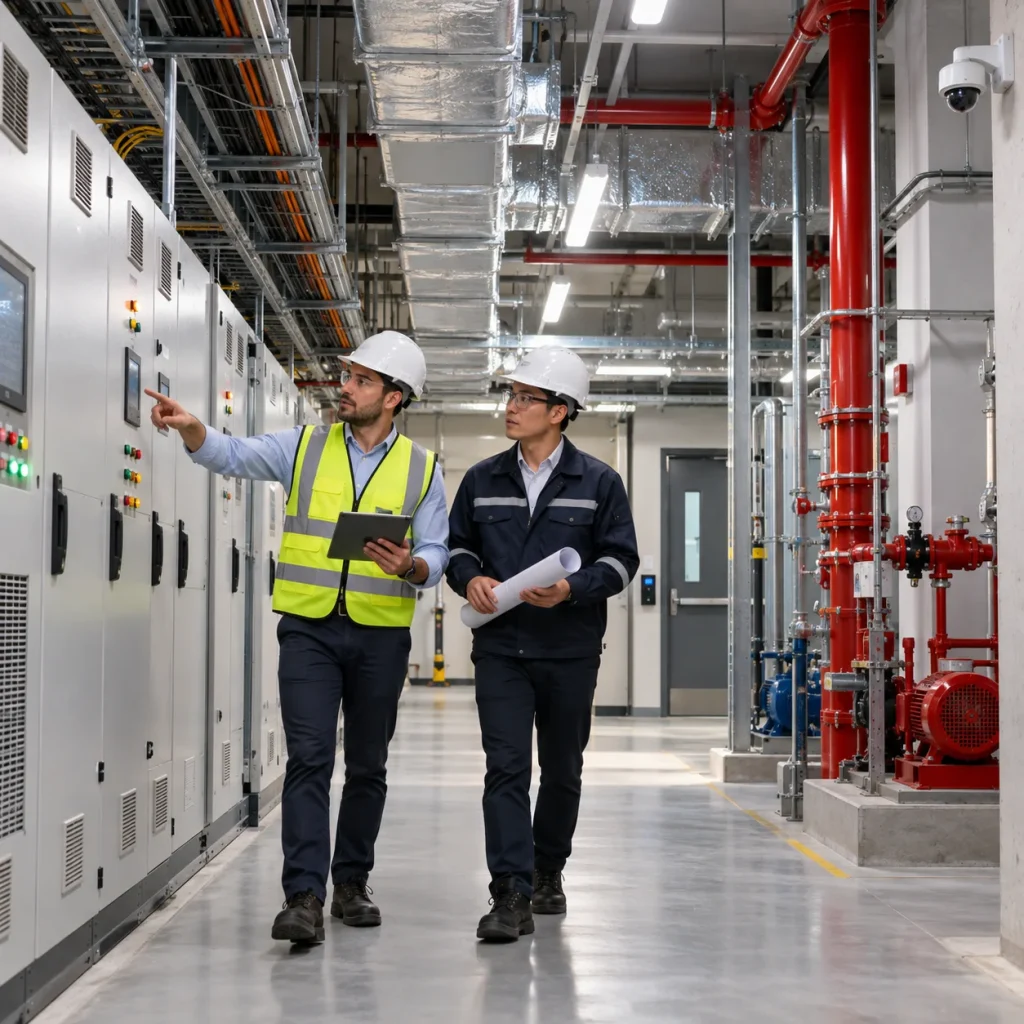
When technical systems are coordinated early, projects can run more smoothly. Electrical teams can plan power requirements for HVAC equipment. Security systems can be positioned without interfering with fire safety devices. Cable routes can be organized efficiently. Equipment rooms can be planned with enough space for maintenance.
This coordination can reduce installation changes and unnecessary rework.
It can also help control costs. Correct planning reduces the risk of purchasing unsuitable equipment or making expensive modifications later.
For commercial and industrial clients, this can make a significant difference because large projects often include multiple systems and contractors.
Maintenance Is Part of the Solution
Installation is only the beginning of a technical system’s lifecycle. Regular maintenance is necessary to keep equipment working properly.
Electrical panels should be inspected for loose connections, overheating, or damaged components. Fire safety systems should be tested regularly. CCTV cameras and access control devices should be checked for proper operation. HVAC equipment should be cleaned and serviced. Solar panels and energy systems should also be inspected periodically.
Preventive maintenance can help identify small issues before they become larger problems.
Annual maintenance contracts provide a structured way to manage routine servicing. Instead of waiting for equipment to fail, maintenance can be planned according to the needs of each system.
Supporting Residential, Commercial and Industrial Projects
Different types of properties require different engineering solutions.
Residential projects may focus on electrical safety, solar power, security, and comfortable indoor environments.
Commercial buildings often require access control, fire protection, reliable electrical distribution, backup power, and HVAC systems.
Industrial facilities may have more complex requirements, including larger electrical loads, specialized ventilation, stronger fire protection, and advanced security systems.
The most effective solution depends on the size of the project, building use, operating conditions, and future expansion plans.
Building Systems That Are Ready for the Future
Modern infrastructure should be designed with future growth in mind. Businesses may expand their operations, install additional equipment, increase energy consumption, or adopt new technologies.
A properly planned electrical system can make future expansion easier. A well-designed security system can support additional cameras or access points. Solar systems can sometimes be expanded as energy requirements increase. HVAC systems can be upgraded or extended when building layouts change.
Future-ready design helps reduce the need for major changes later.
A Practical Approach to Engineering
Reliable engineering is not only about installing equipment. It is about understanding how different systems work together and how they support the people using the building.
Yousol Technologies (Pvt.) Ltd. focuses on practical solutions across solar energy, fire safety, security and automation, electrical engineering, HVAC, and ventilation. Each system should be selected and installed according to actual project requirements rather than using a one-size-fits-all approach.
Professional planning, quality installation, proper testing, and ongoing maintenance can all contribute to better long-term performance.
Conclusion
Modern buildings require multiple technical systems to operate safely and efficiently. Electrical infrastructure provides reliable power. Fire safety systems help protect people and property. Security and automation improve control. HVAC and ventilation support comfort and airflow. Solar energy can improve efficiency and reduce dependence on conventional electricity.
When these systems are planned together, property owners and businesses can achieve better coordination, easier maintenance, stronger safety, and improved long-term reliability.
By investing in integrated engineering solutions, residential, commercial, and industrial clients can create facilities that are safer, more efficient, and better prepared for future needs.